
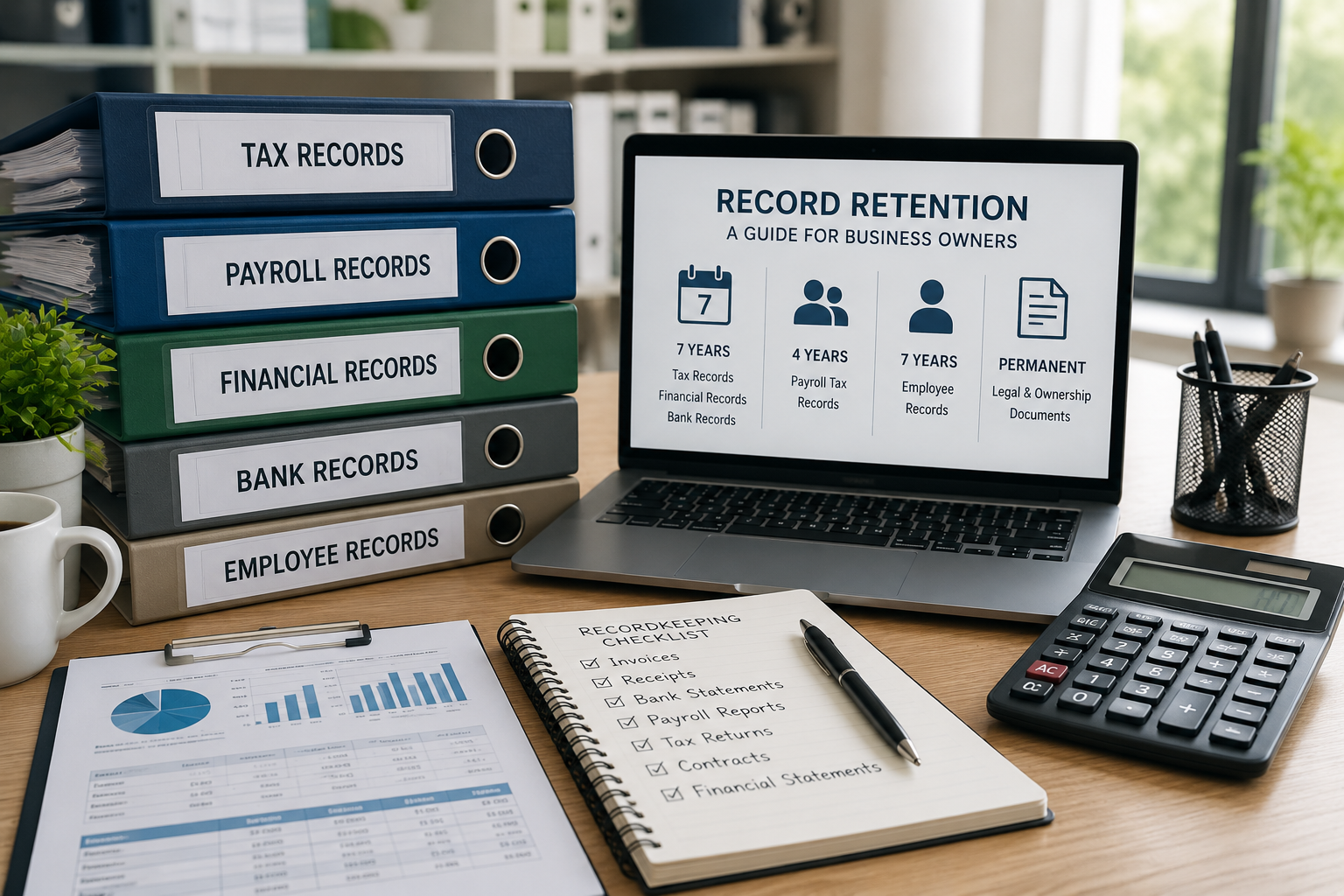
Every business generates records. From invoices and receipts to payroll reports and tax returns, these documents form the financial history of your company. While many business owners think about recordkeeping only during tax season, maintaining accurate records throughout the year plays a much larger role in protecting your business.
Well-organized records make it easier to prepare tax returns, support deductions, monitor cash flow, secure financing, respond to audits, and make informed business decisions. They also reduce the stress that comes with searching for missing paperwork when deadlines or unexpected requests arise.
As accountants, we’ve seen firsthand how proper recordkeeping helps businesses avoid costly mistakes. Whether you’re a sole proprietor, partnership, or corporation, understanding how long to retain your records is an important part of responsible financial management.
How Long Should Business Records Be Kept?
A common question business owners ask is whether there’s a single rule for every document. The answer is no.
Different records have different retention requirements based on tax regulations, employment laws, and legal obligations. However, for most financial documents, keeping records for at least seven years is considered a practical and widely recommended standard.
While the IRS generally has three years to audit a tax return, that period can extend to six years if a significant amount of income was omitted. In addition to IRS requirements, businesses may need historical records to resolve legal disputes, support amended tax returns, satisfy lender requests, or provide documentation during financial reviews. Maintaining records for seven years offers an added level of protection for most businesses.
Not every document, however, follows the same timeline.
Tax Records
Your tax records should receive the highest level of attention because they support every figure reported on your tax return.
Keep copies of filed federal and state tax returns together with receipts, invoices, bank statements, expense records, cancelled checks, and any schedules used to prepare those returns. Retaining these documents for at least seven years provides the documentation needed if questions arise regarding income, deductions, credits, or business expenses.
Having complete tax records also makes future planning easier, particularly when preparing amended returns, applying for financing, or working with a new accountant.
Payroll Records
Payroll records are governed by different retention requirements.
The IRS recommends retaining payroll tax records for at least four years after the tax becomes due or is paid, whichever is later. These records include employee earnings, tax withholdings, payroll tax filings, benefit deductions, retirement contributions, and payment histories.
Maintaining complete payroll documentation helps demonstrate compliance with federal tax requirements while providing valuable support if employment-related questions or payroll discrepancies arise.
Employee Records
Employment records remain important even after an employee leaves your business.
Personnel files, employment agreements, payroll history, performance reviews, benefit documentation, disciplinary records, and termination paperwork should generally be retained for seven years after employment ends. Businesses should also retain job applications and recruitment records for candidates who were not hired for an appropriate period to demonstrate fair hiring practices if needed.
Keeping thorough employee records protects both the employer and employees while supporting compliance with employment regulations.
Financial Records
Your accounting records provide the clearest picture of your business’s financial health.
General ledgers, profit and loss statements, balance sheets, cash flow reports, budgets, journal entries, and audit reports should generally be retained for seven years. Many accounting professionals also recommend preserving annual financial statements permanently because they provide valuable historical insight into business growth, profitability, and long-term performance.
These records become increasingly valuable as your business expands and financial decisions become more complex.
Banking Records
Every transaction that flows through your business should be supported by reliable documentation.
Business bank statements, credit card statements, cancelled checks, deposit records, electronic payment confirmations, merchant statements, and cash receipt records should generally be kept for seven years. These documents support your accounting records, simplify reconciliations, and provide evidence if discrepancies or disputes arise.
Modern cloud-based bookkeeping software has made retaining banking records significantly easier by providing secure digital storage and quick access whenever information is required.
Some Business Records Should Be Kept Permanently
While many financial records eventually reach the end of their retention period, certain documents should remain part of your permanent business archive.
These include:
- Articles of Incorporation
- Partnership or operating agreements
- Shareholder records
- Corporate meeting minutes
- Business licences and registrations
- Stock certificates
- Property deeds
- Trademark, copyright, and patent documentation
These records establish your company’s legal identity, ownership, and governance. They may be required years or even decades after they were created, making permanent retention the safest approach.
Is Digital Recordkeeping Acceptable?
Yes. The IRS accepts electronic records provided they accurately reproduce the original information and remain accessible when requested.
For many businesses, digital recordkeeping has become the preferred approach because it improves organisation, reduces paper storage, and allows documents to be retrieved within minutes. Secure cloud storage, automated backups, and role-based access also help protect sensitive financial information from accidental loss or unauthorised access.
Businesses that use accounting software such as QuickBooks can often link receipts, invoices, bank transactions, and financial reports in one central system, making record management more efficient throughout the year.
Good Recordkeeping Is Good Business
Effective record retention isn’t about keeping every document forever. It’s about understanding which records matter, how long they should be retained, and maintaining an organised system that supports your business as it grows.
For most businesses, retaining financial records for seven years, maintaining payroll tax records for four years, and preserving legal and ownership documents permanently provides a practical framework for compliance and financial security.
At MyAccountingGuru, we’ve helped businesses organise their bookkeeping, maintain accurate financial records, and stay prepared for tax season, audits, and everyday financial decisions. Whether you need ongoing bookkeeping support or help building a better recordkeeping system, having experienced accounting professionals by your side allows you to spend less time managing paperwork and more time growing your business with confidence.
